
Leaving The Times
-30-

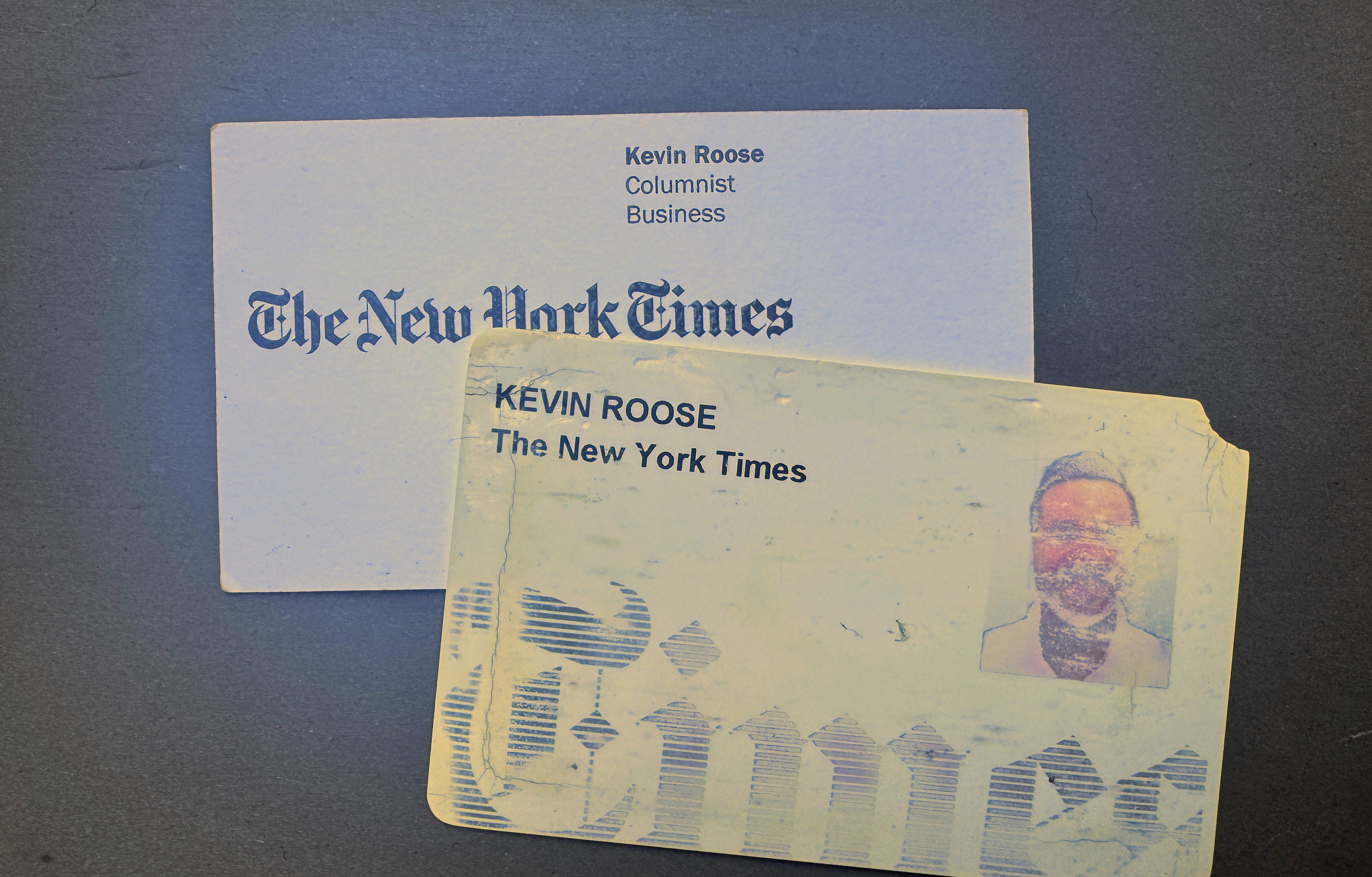
I first visited The New York Times in 2010. I was fresh out of college, jobless during a recession, and new to New York, when I got an out-of-the-blue email from a legendary Times financial columnist, Floyd Norris. Floyd had picked up my first book (a memoir of the semester I spent undercover at Liberty University) and wrote to me to tell me that he liked it.
I was floored, and asked Floyd if we could get lunch sometime. He agreed. We met in the cafeteria of the Times building on 8th Avenue, and I spent an awestruck hour peppering him with questions about journalism. He told me that business reporting was underrated, and that journalism school (which I had been considering) was probably overrated. If I wanted to be a good reporter, he said, I should get hired in a newsroom, surround myself with the best reporters I could find, and learn on the job.
I got a job at The Times the next year, writing for DealBook about Wall Street investment banks. I loved the job, even though I was horribly underqualified. (I’ll never forget the bank executive who called my editor screaming because I’d mixed up profit and revenue in their quarterly earnings story.) But I worked hard, filed clean copy, and landed the occasional scoop. And, as Floyd had predicted, I got better by osmotically absorbing the wisdom of the people around me. I often told friends that my version of journalism school was sitting next to Andrew Ross Sorkin, Susanne Craig, and Jim Stewart, and listening to them work the phones with their sources.
Around 2018—after I’d come back to The Times as a tech columnist, after a few years working at New York Magazine and an Ill-Fated New Media Venture I will not name out of respect for the dead—I got podcast-pilled. I guest-hosted an episode of The Daily, about a right-wing Facebook news outlet I’d been reporting on, and got more positive feedback than I’d ever gotten on a print story. I loved the way audio turned the cathedral of journalism inside out — letting listeners in on our strange byways and customs, showing how hard we work to get things right, and proving to them that reporters are human beings and not bloodless institutional avatars. And I loved how much more appetite audio listeners seemed to have for complex, nuanced stories than print readers, who were usually skimming and distracted.
My podcast-pilling got more serious in 2020, when I hosted an eight-episode audio show called Rabbit Hole. The show’s subject matter was dark and depressing—it was about internet radicalization, and involved talking to (and being attacked by) all manner of online ghouls and goblins. But making the show was a blast. Rabbit Hole briefly hit #1 on the podcast charts, and got on some year-end lists, and I became obsessed with the medium. I listened to every podcast in the iTunes top 100, including some dreadful true-crime shows, and tried to reverse-engineer what made them work.
I realized that most of the podcasts I liked were loose chat shows, not scripted narratives, and that the best shows in the genre all had multiple hosts with genuine chemistry between them. So when Rabbit Hole was over, I decided to pitch the NYT Audio bosses on a weekly talk show about tech, hosted by me and my friend Casey Newton, who had been a star reporter at The Verge before becoming a star newsletter writer at Platformer. Casey had never worked at The Times, but had a background in improv comedy, and was both hilarious and a world-class reporter. We got along well, and made each other laugh, and had just enough disagreements between us to make our conversations interesting.
The show we initially pitched was called “Not Gonna Make It”—a wink at the 2021-era Twitter dunk on people who didn’t understand or invest in crypto—and it was supposed to be a three-host, roundtable chat show about Web 3.0, meme stocks, the metaverse, and other unfortunate tech trends of the early 2020s.
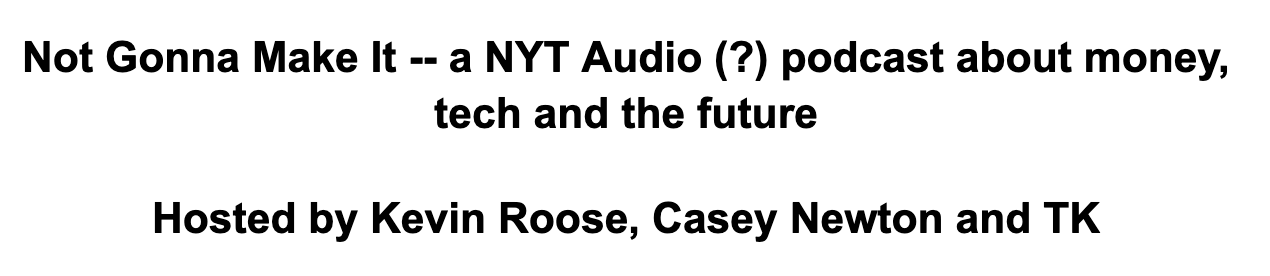
The Times, wisely, passed on our half-baked idea. But shortly after, Kara Swisher left her Times podcast, and there was a vacant feed for a tech show. We got the gig. “Not Gonna Make It” was taken, so we settled on our second-choice name: Hard Fork. (Another regrettably dated crypto term.) We taped a few pilots, each slightly less bad than the last, and launched the show in October 2022. Our first reviews on iTunes were mostly variations of “who put these idiots in my Kara Swisher feed, and how do I get them off?”
But we kept going, built a small and wonderful team of producers and editors who made us sound smarter than we are, and got incredibly lucky. Weeks after our show’s debut, Elon Musk bought Twitter. A few weeks after that, ChatGPT was released. Casey was breaking scoop after scoop on Twitter, and I had written a book on AI and had a bunch of sources in the industry. Our listenership kept growing, and pretty soon, we were doing respectable numbers. We decided to focus pretty much exclusively on AI, and we started to hear from more and more listeners who loved the show. Some of them were CEOs in Silicon Valley. Some of them were botanists in Scotland, or schoolteachers in Oregon. We heard from 11-year-olds who listened to the show with their parents, and 80-year-olds who listened so they could have conversations about tech with their grandkids. There was no consistent pattern among them, other than that they were interested in AI, or deathly afraid of it, or generally wanted some light-hearted sense-making to listen to during their Friday commutes.
Nearly four years and 200 episodes later, co-hosting Hard Fork has been the most rewarding experience of my career. From a small studio in the Times’ San Francisco bureau, we put out weekly shows about the rise of AI, the perils of chatbot companionship, and whatever else is lighting up our group chats. We’ve interviewed every major AI leader, including two interviews with Sam Altman, two with Dario Amodei, and three with Demis Hassabis. We showed up to interview ex-Canadian Prime Minister Justin Trudeau wearing Canadian hockey jerseys, became Reddit-famous by taping an episode at Gate E8 of the San Francisco Airport, and flew to Arizona to order Brazilian Bum Bum Cream from an Amazon delivery drone. We’ve hosted two sold-out live shows in San Francisco, made TIME’s list of the 100 best podcasts of all time, and even launched a social network, The Forkiverse, with our pals at Search Engine. We have tried, above all, to keep the show a good hang — a conversation between two reporters who are also friends, and who don’t take themselves or each other too seriously, no matter how serious the stories we’re discussing are.
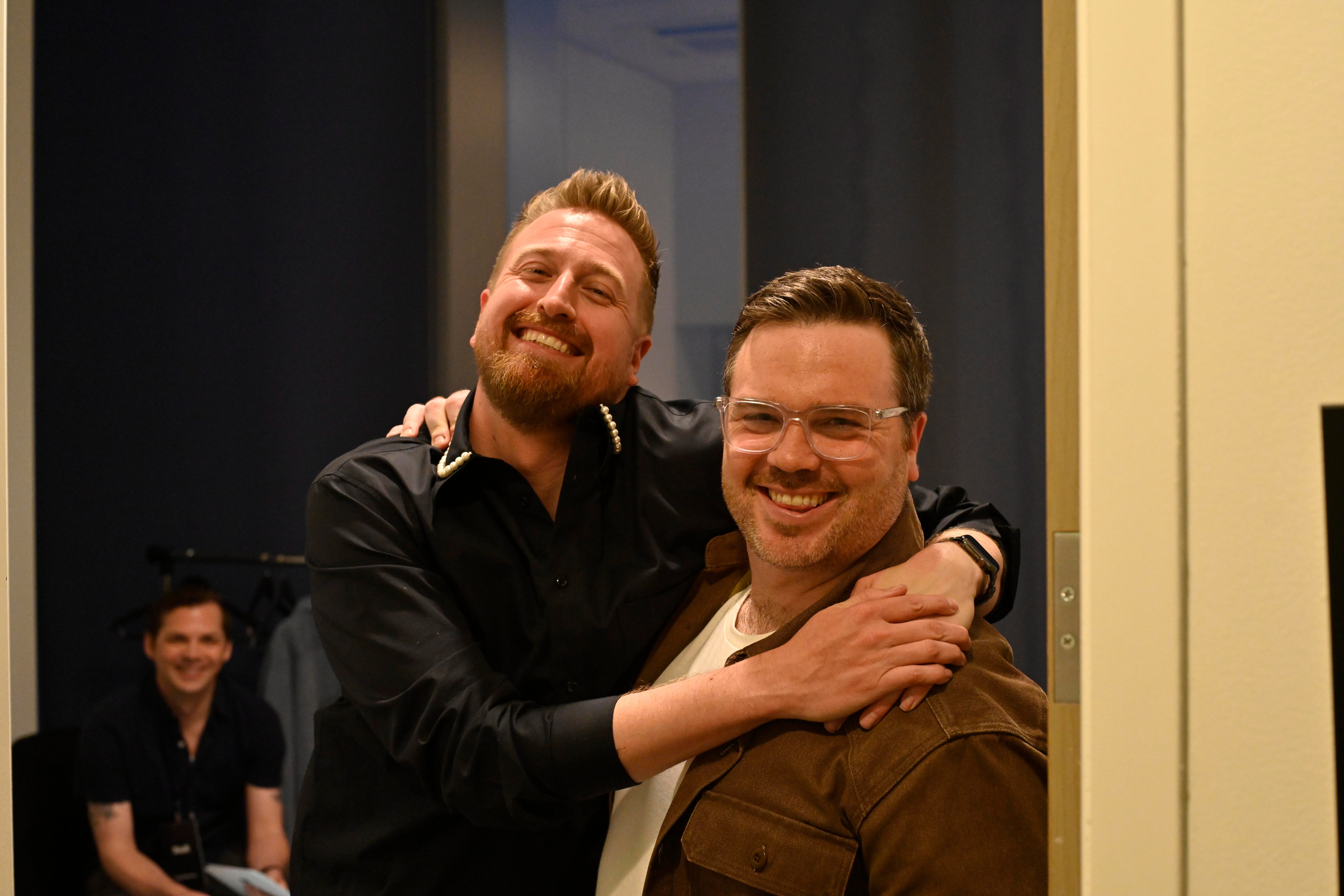
The Times has been a great home for Hard Fork — and a great home for me, for many years before that — but as Casey and I discussed the future of the show, we realized that what we really wanted was to start a company together, and build something we would own. We’re both entrepreneurial by nature, and Casey’s success running Platformer has convinced me that not all journalists are bad with money. And we’re both excited to start a new media company that takes AI progress seriously, that is clear-eyed about the capabilities and risks of powerful AI systems, and that tries to empower and entertain people in the face of radical uncertainty.
So that’s the plan. After our final Hard Fork episode in August, we’ll start a new show together, under our own shingle. I can’t give too many details yet (there are still some domain names we need to grab, and self-indulgent manifestos we need to write) but suffice it to say that our goal is to take the thing that makes Hard Fork work and extend it into new formats and directions. Casey will keep writing Platformer, and I’ll have my book and other side projects. I’m not really Going Independent, in the conventional journalist-to-Substack way. (Speaking of which, this Substack is going to stay free and occasional; I don’t want to accidentally create another job for myself, and Platformer is better than any paid newsletter I could write.) But I’m definitely going independent in the sense of giving up a stable W-2 job, and building something new outside the comfort of a storied newsroom. It’s a little terrifying! But also tremendously exciting. (Claude, an ensouled pile of matrix multiplications that I’ve enlisted as my career advisor, calls the feeling I’m having a “leap-wobble,” and assures me that it’s normal.)
I’m so grateful to The Times, my home of more than a decade, for showing me the ropes of journalism and giving me the greatest job a reporter can hope for. It’s the best news organization in America, stocked wall-to-wall with masters of the craft, and I’m still as in awe of the place as I was when I walked in to the cafeteria as an aimless 22-year-old. I’m also grateful for the incredible Hard Fork team, led by Vjeran Pavic, Whitney Jones, and Rachel Cohn, that makes the show every week, and the various bosses and editors — Paula Szuchman, Jen Poyant, Sam Dolnick, Brooke Minters, Pui-Wing Tam, Jim Kerstetter, Joe Plambeck, Ellen Pollock — who have gamely put up with us over the years.
But it’s time to stretch my wings and try something new. My first mentor in journalism, AJ Jacobs, used to give me the advice that I should “say yes to adventures or you’ll lead a very dull life.” I don’t have a dull life, thank God. But I’d like to say yes to more adventures, starting with this one.
If you’d like more updates on the new company, or what Casey and I are up to, you can subscribe to this newsletter. And if you just want to keep listening to us on Hard Fork, or reading me in The Times, you can keep doing that until August.
And even after I’ve turned in my Times badge, I’m going to try to be guided by the advice Floyd Norris gave me all those years ago.
“One thing I have learned in a long career in journalism,” he told me, “is that you get respect and appreciation from those you write about not by being a cheerleader but by being accurate — including understanding the sometimes complicated world you are writing about — and fair even to those you criticize.”
The problem with doing good work at the NYT's tech desk is that it launders the lack of journalistic standards in other parts of the paper. Congrats!
Congrats to you and Casey! You two have always been a source of humor and education over the last several years as we all try to make sense of where tech is pushing us toward.
Super excited to see this new chapter for you both. I’m obviously slightly biased as an independent photojournalist, but independent media is where it’s at…